
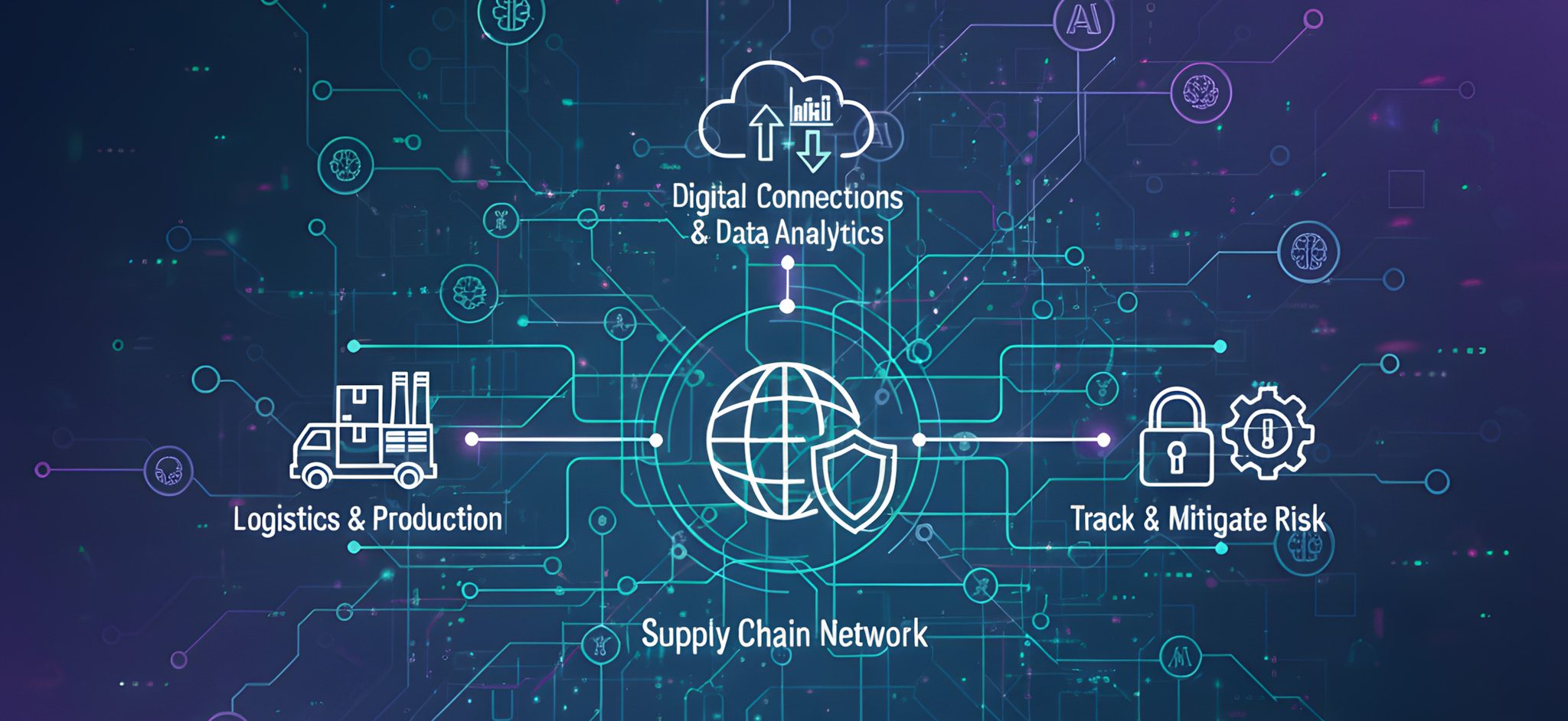
Supply Chain Risk Management Software
Building Resilience Through Visibility, Data and Compliance
Global supply chains have become vast networks of suppliers, sub-suppliers, logistics hubs and data exchanges. This complexity allows businesses to deliver innovative products and services quickly — but it also creates significant risk.
In 2026, organizations that lack a structured SCRM process are at a disadvantage — both operationally and in terms of regulatory compliance.
🛡️ Why Supply Chain Risk Management Matters in 2026
The U.S. National Institute of Standards and Technology (NIST) warns that malicious functionality, counterfeit hardware, tampering or poor manufacturing practices can hide anywhere in a distributed supply chain. Organizations need reliable and resilient products and must manage risks that reduce visibility into their supply chains.
📋 Government Response
Government agencies like NIST and the Cybersecurity and Infrastructure Security Agency (CISA) have elevated supply chain risk management (SCRM) as a priority.
NIST's revised Cybersecurity Supply Chain Risk Management guidance (SP 800-161 Rev. 1) offers a comprehensive framework for identifying, assessing and responding to cybersecurity risks throughout the supply chain.
CISA and the National Credit Union Administration (NCUA) recommend building cross-functional teams, documenting policies based on standards such as NIST, knowing your suppliers, verifying third parties and regularly evaluating the SCRM program.
💻 Why Supply Chain Risk Management Software Is Essential
Supply chain risk management is no longer a manual process of spreadsheets and vendor questionnaires. Modern supply chains contain thousands of components, sub-contracts and data flows. Without software to track suppliers, map dependencies, score risks and monitor continuously, organizations risk:
- 🔒 Hidden cybersecurity vulnerabilities: NIST notes that the many sources of components and software in global supply chains make finished products vulnerable to attack. A ransomware attack on a supplier or tampering in a component can disrupt manufacturing or expose sensitive data.
- ⚖️ Inconsistent compliance: Regulatory bodies expect organizations to integrate supply chain risk considerations into acquisition and procurement processes. Without centralized tracking and digital rule automation, teams may miss critical updates or apply outdated requirements.
- ⚠️ Operational disruptions: Foreign-owned hardware, counterfeit components and unvetted third parties can introduce supply chain disruptions. Proactive risk management reduces downtime and protects customers.
✅ The Solution
Supply chain risk management software helps organizations address these challenges by automating data collection, risk scoring and continuous monitoring. It enables teams to respond quickly to alerts and provides an auditable record of decision making.
📖 Official Guidelines: What Regulators Expect
Government guidance offers a blueprint for what effective supply chain risk management should include:
📋 NIST Cybersecurity Supply Chain Risk Management (C-SCRM)
NIST's SP 800-161 Rev. 1 is the de facto standard for C-SCRM. The publication guides organizations to identify, assess and respond to cybersecurity risks throughout the supply chain.
Key points include:
- ✓ Integrate C-SCRM into risk management frameworks and acquisition processes
- ✓ Monitor suppliers continuously, because risks can arise at any point in the life cycle
- ✓ Build trust by ensuring that purchased hardware and software are trustworthy
🎯 CISA/NCUA Essential Steps for Supply Chain Risk Management
CISA and NCUA provide a concise checklist for organizations looking to build an effective SCRM practice:
- Identify people: Assemble a cross-functional SCRM team that includes procurement, IT, security and compliance experts.
- Manage security and compliance: Document policies and procedures based on industry standards (such as NIST SP 800-161). Make sure the program has executive sponsorship and clear responsibilities.
- Assess components: Catalog the hardware, software and services your organization procures, including outsourced functions.
- Know your suppliers: Identify suppliers and sub-suppliers, understand their geographic footprint and vet their security posture.
- Verify third parties: Perform due-diligence assessments and require assurance from vendors.
- Evaluate and improve: Periodically test the SCRM program's effectiveness and adjust based on lessons learned.
CISA and NCUA also recommend risk mitigation techniques such as purchasing through reputable sellers, reviewing hardware for anomalies, conducting automated software testing and monitoring products after purchase.
⚙️ Core Features of Supply Chain Risk Management Software
Given the regulatory expectations and the scale of modern supply chains, effective SCRM software should provide the following capabilities:
Supplier & Sub-Tier Mapping
Maintain a comprehensive inventory of suppliers, sub-suppliers and their geographic locations. Mapping relationships helps teams identify dependencies and prioritize risks.
Risk Identification & Scoring
Automatically gather data on supplier financial health, cybersecurity posture and geopolitical exposure. Use scoring models to rank suppliers by risk level.
Continuous Monitoring & Alerting
Monitor news feeds, security bulletins and compliance announcements for incidents that could affect suppliers. Alert teams when events occur.
Regulatory Compliance & Digital Rules
Translate regulatory requirements into machine-readable logic that updates automatically when NIST, CISA or other regulators issue new guidance.
Third-Party Assessment Automation
Streamline vendor questionnaires and due-diligence processes with self-service portals for suppliers to submit evidence and attestations.
Reporting & Audit Trails
Generate reports demonstrating compliance with NIST guidance. Maintain version history and evidence for audits or regulator inquiries.
These features align directly with the official guidance from NIST and CISA/NCUA. They also create a foundation for advanced analytics and predictive modeling.
🚀 Emerging Technologies and Future Directions
The supply chain risk management landscape continues to evolve. Organizations are exploring:
- 🤖 Artificial Intelligence (AI) and Machine Learning: AI models can analyze large datasets on supplier performance, quality issues and geopolitical events to identify early warning signs.
- 🔗 Blockchain and Secure Data Exchange: Distributed ledger technology can provide immutable records of transactions and provenance data, enhancing traceability and reducing fraud.
- 📡 Internet of Things (IoT) Monitoring: Sensor data from manufacturing equipment and shipments can inform real-time risk assessments, enabling dynamic adjustments to logistics and sourcing.
- 🔄 Integration with Regulatory Intelligence Platforms: The next generation of SCRM software will integrate directly with regulatory intelligence platforms, pulling in updates from NIST, CISA and other agencies to automatically adjust compliance checks.
While these technologies are still maturing, the foundation — centralized data, digital rule automation and continuous monitoring — is already necessary.
How ARC by VeritIQ Extends Supply Chain Risk Management
ARC was built around the idea that compliance cannot be static. Our regulatory intelligence platform already monitors and archives every version of federal and state mortgage regulations, automatically converting them into digital rules for automated validation. Many of the same principles apply to supply chain risk management:
- ✓
Regulatory Index Integration
ARC's regulatory index can incorporate supply chain guidance from NIST and CISA. When a new directive or requirement is released, it is flagged and incorporated into digital rules automatically.
- ✓
Digital Rules for Procurement
Instead of manually translating SCRM policies into checklists, ARC generates machine-readable rules that are applied consistently across procurement processes.
- ✓
Audit-Ready Evidence
ARC maintains version history for every rule and captures evidence of compliance. When auditors ask which SCRM criteria were in place at a specific time, ARC provides a timestamped record.
- ✓
Cross-Functional Collaboration
ARC's workflow tools bring together procurement, security, legal and compliance teams. Users can assign tasks, review risk assessments and track remediation in one place.
By connecting supply chain risk data with regulatory intelligence, ARC extends its capabilities beyond mortgage compliance into broader enterprise risk management.
Building Resilient and Compliant Supply Chains
Supply chain risk management is no longer optional. Regulatory guidance from NIST and CISA/NCUA highlights the need to identify, assess and mitigate risks across the entire product life cycle. Manual processes cannot scale to the complexity and speed of modern supply chains.
Adopting supply chain risk management software equipped with supplier mapping, risk scoring, continuous monitoring and digital rule automation empowers organizations to:
- ✓ Maintain visibility over the extended supply chain
- ✓ Meet evolving regulatory requirements
- ✓ Reduce operational disruptions
- ✓ Build a culture of resilience and accountability
ARC by VeritIQ enhances these capabilities by integrating regulatory intelligence and digital rules — ensuring that risk management and compliance are always in sync.